
Of $90 billion remittances that India is expected to receive in 2022, only $27.4 billion has come in the first half of the year.

India's top oil and gas producer ONGC on Friday reported a tripling of net profit in the June quarter as it earned record prices before the government slapped a tax on windfall profits arising from a global rally in energy rates. Oil and Natural Gas Corporation's (ONGC) standalone net profit at Rs 15,205.85 crore, or Rs 12.09 per share, in April-June, compared to Rs 4,334.75 crore, or Rs 3.45 a share, in the same period a year back, according to a stock exchange filing by the company. Sequentially, the profit was higher than the Rs 8,859.54 crore net profit of January-March.

The maiden, critical mineral auction in India has failed to enthuse the mining industry, with the first tranche achieving less than a 50 per cent success rate and the auction of several mines was cancelled owing to low response. The results, announced by the Ministry of Mines on Monday, showed that six lesser-known companies emerged as preferred bidders. Among these were Agrasen Sponge, Kundan Gold Mines, Dalmia Bharat Refractories, Sagar Stone Industries, and Maiki South Mining.

Soon, you will see the birth of the hottest commodity futures in the world -- diamond derivatives.

Murmu's address to the joint sitting of Parliament will also be the first after the constitution of the 18th Lok Sabha.

As the Indian currency hovers around its lowest versus the US greenback, several smaller and mid-sized companies are expected to face rough weather as almost 44 per cent of the foreign loans taken by Indian companies remained unhedged. According to the data sourced from the Reserve Bank of India, Indian companies raised around $38.2 billion in the financial year ended in March. Of this, only 56 per cent of the loans are hedged while the rest of the foreign loans remain unhedged, thus risking the companies to forex volatility.

Domestic commercial vehicle sales volume is expected to grow 9-11 per cent in FY24 driven by medium and heavy commercial vehicles and an estimated economic growth of around 6 per cent, rating agency CRISIL said on Monday. Besides, an increased allocation to infrastructure spending in the Union Budget for next fiscal year will support demand, it said. This would be the third consecutive year of growth in the domestic CV industry, according to CRISIL.

The 30-share Sensex lost 79 points to close at 27,347 and the 50-share Nifty shed 22 points to close at 8,278.

The decline in exports is mainly on account of poor demand in India's key destinations -- the Europe and the US -- and it may take some more months for the situation to improve. The demand scenario is "not looking very good as far as Europe is concerned, and the US also we have seen a decline in demand. "For the next 2-3 months, I think the demand scenario does not look very optimistic," DGFT (Director General of Foreign Trade) Santosh Kumar Sarangi told reporters.

Maruti Suzuki India (MSIL) does not anticipate growth in the small car segment because people continue to find these vehicles unaffordable, chairman R C Bhargava said on Wednesday. He said the market had clearly shifted towards the sport utility vehicle (SUV) segment and the company will go in the same direction. The domestic sales of utility vehicles jumped in India by 34.54 per cent to about 2 million units in FY23.

'Auto, pharma, and industrials have delivered well in the recent quarter, while businesses like quick-service restaurants, consumer staples, and durables have underperformed in volume growth.'

Automaker Toyota Kirloskar Motor (TKM) on Tuesday said it will increase prices of its entire model range by up to 2 per cent with effect from October 1 in order to partially offset the impact of rise in input costs. The company, which is a joint venture between Japan's Toyota Motor Company and Kirloskar Group, sells a range of vehicles including Innova Crysta and Fortuner in the domestic market. The company will realign the prices of its models, with effect from October 1, 2021, TKM said in a statement.

Size matters on the road. Small is not dominating India's car market any more. The share of cars priced up to Rs 5 lakh in the passenger vehicle market has fallen to 10.5 per cent in the first 11 months of 2021-22, compared with 26 per cent in 2018-19 (FY19), the lowest in four years, according to data from industry sources. Even the share of those in the price range between Rs 5 lakh and Rs 7.5 lakh has dropped to 32.4 per cent in the same period, from 34.9 per cent.

Gold prices are struggling and are down 18 per cent from their March highs. But stock prices have fallen even more. As a result, the precious metal has begun to outperform equities - both in the domestic market and international markets. Gold prices are up 2.6 per cent in the domestic market in the current calendar year (CY22) so far, according to the World Gold Council (WGC), compared to a 1.7 per cent decline in the Sensex year-to-date (YTD).

Gold-silver ratio indicates more upsurge possible for the white metal.

Analysts assert that Vedanta Group's plan to demerge India-listed Vedanta Limited into six listed entities will not resolve the debt problem of its promoter entity, Vedanta Resources (VRL). They suggest that additional asset sales or stake sales by promoters will be necessary to repay the debt. Vedanta is already considering the divestment of its iron-steel division and its copper plant.

Trend could continue on downward revision in winter harvests.
The global equity research firm said in its weekly market analysis newsletter that investors' concern over commodity prices are overblown, while no fresh rate hikes are likely in the coming months.
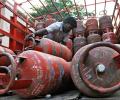
The ministry of petroleum and natural gas is evaluating a threshold at which the subsidy on liquefied petroleum gas (LPG or cooking gas) will be reinstated. According to a senior government official in the know, a survey is currently being conducted to determine the price at which maximum consumers will keep buying domestic cylinders. One of the options also being considered is to limit any subsidy disbursal only to Pradhan Mantri Ujjwala Yojana (PMUY) beneficiaries.

The RBI is considering permitting FII and commercial banks to trade on Indian commodity exchanges.

In the context of RBI's view that the real interest rate, defined as the repo rate less "look forward" CPI, should be around 150-200 basis points.

Benchmark indices advanced for the second straight session on Tuesday, with the Sensex and Nifty jumping nearly 2 per cent each, mirroring a rally in global equity markets. Buying in index majors Reliance Industries and IT stocks buoyed the benchmarks. The BSE Sensex zoomed 934.23 points or 1.81 per cent to settle at 52,532.07. During the day, it rallied 1,201.56 points or 2.32 per cent to 52,799.40. The NSE Nifty climbed 288.65 points or 1.88 per cent to finish at 15,638.80.

Top government officials in New Delhi have started discussions with stakeholders ranging from shipping and container companies to export promotion councils to understand the impact of the Iran-Israel tensions and plan ahead. Inter-ministerial talks are also being lined up amid the crisis situation in West Asia, sources confirmed. While the crude flows are not directly under any threat, elevated oil prices remain a concern, according to officials.

The country's largest carmaker Maruti Suzuki India on Wednesday reported a 66 per cent decline in consolidated net profit at Rs 487 crore in the second quarter ended September 30, 2021, as production was affected by the ongoing semiconductor shortage. The rise in commodity prices also had an adverse impact on the company's earnings.

Gold is an excellent asset class for diversification and should be included in all long-term portfolios.

The 30-share Sensex ended down 190 points at 26,889.

Retail inflation eased to 7.04 per cent in May, mainly on account of softening food and fuel prices as the government as well as the RBI stepped in to control spiralling price rise by way of duty cuts and repo rate hike. However, the inflation print stayed above the Reserve Bank's upper tolerance level of 6 per cent for the fifth month in a row. The Consumer Price Index (CPI) based retail inflation was 7.79 per cent in April.

Softening of global commodity prices might not help much
This will allow free movement of onions within the country and for export. The removal of unnecessary restrictions and relaxations of controls on 'onion' will give fair returns to growers, promote consumer interest and free trade.\n\n\n\n
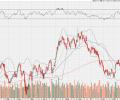
Where do the commodities market go in the new year? Sonali Ranade offers an insight.

The fast-moving consumer goods (FMCG) sector has underperformed the Nifty over the past year as its 20 per cent return is trumped by 29 per cent of the benchmark index. The FMCG index saw a 2.2 per cent drop in the last session, while the Nifty lost 1 per cent. FMCG is seen as a defensive segment. The demand for staples like personal care products, groceries and snacks tend to be stable. FMCG companies are consistent dividend-payers.

Kansai Nerolac Paints has seen its market capitalisation (mcap) erode by over 5 per cent since May 3 after posting a subpar performance in the fourth quarter of 2023-24. Weighed down by stiff competition, the company has shed Rs 1,172 crore over the past two weeks in mcap. India's largest paint maker in terms of mcap, expects double-digit growth in the industrial segment and aims to maintain margins, but its performance in decorative paints could suffer amid competition.

Though India was under lockdown for only seven days of the quarter, global demand and commodity prices began falling from February as COVID-19 was spreading in other countries. 1,002 listed companies - excluding banks, non-bank lenders, insurers, brokerages, and IT firms - reported a combined pre-tax loss of around Rs 2,700 crore during Q4.
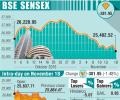

This means lower losses on fuel sales by Indian oil companies and a shrinking oil subsidy bill for the government.

India's manufacturing sector activities witnessed faster growth in April amid quicker increases in production as well as factory orders, and renewed expansion in international sales, a monthly survey said on Monday. The seasonally adjusted S&P Global India Manufacturing Purchasing Managers' Index (PMI) rose from 54.0 in March to 54.7 in April, as a retreat of COVID-19 restrictions continued to support demand. The April PMI data pointed to an improvement in overall operating conditions for the tenth straight month. In PMI parlance, a print above 50 means expansion, while a score below 50 denotes contraction.

High-end apartments, penthouses, and bungalows boasting amenities like swimming pools, expansive driveways, and premium interiors are becoming highly sought after.

The best part of the collapse in the price of gold [bullish for India on its own merits] was in what it says for commodities in general but for crude in particula, says Sonali Ranade

Demonetisation was not a good idea and the time should have been utilised instead to fine-tune the Goods and Services Tax before it was introduced, said Gita Gopinath, John Zwaanstra Professor of International Studies and of Economics at Harvard University, in an interview with Advait Rao Palepu.
